

20 Ft Container
Add a review FollowOverview
-
Founded Date March 2, 1938
-
Sectors Education Training
-
Posted Jobs 0
-
Viewed 8
Company Description
The Time Has Come To Expand Your Size Of 20 Foot Container Options
Understanding the Size of a 20-Foot Container: Dimensions, Capacity, and FAQs
When it concerns shipping containers, the 20-foot container is among the most frequently utilized alternatives in the logistics and transportation market. Whether you are an entrepreneur seeking to transfer goods overseas or someone considering moving, understanding the dimensions and capability of a 20-foot container is necessary. This article will supply a detailed introduction of a 20-foot container’s size, its capacity, and answers to frequently asked concerns.
Dimensions of a 20-Foot Container
The size of a 20-foot container is standardized, making it easier for shipping companies and clients to plan their logistics. Let’s break down the dimensions frequently related to a 20-foot container:
| Measurement | Imperial | Metric |
|---|---|---|
| Length | 20 feet (ft) | 6.058 meters (m) |
| Width | 8 feet (ft) | 2.438 meters (m) |
| Height | 8.5 feet (ft) | 2.591 meters (m) |
| Interior Length | 19.4 feet (ft) | 5.898 meters (m) |
| Interior Width | 7.7 feet (ft) | 2.352 meters (m) |
| Interior Height | 7.9 feet (ft) | 2.385 meters (m) |
| Door Width | 7.5 feet (ft) | 2.280 meters (m) |
| Door Height | 7.5 feet (ft) | 2.286 meters (m) |
Key Features
-
Capability: A standard 20-foot container can hold a maximum payload of about 22,000 kg (roughly 48,500 lbs). The internal volume is approximately 33 cubic meters (1,172 cubic feet).
-
Product: Most 20-foot containers are built from corrugated steel to make sure strength and durability against external elements.
-
Types of 20-Foot Containers: While the basic container is the most common, there are specialized types, consisting of:
- Reefer Container: Designed for temperature-sensitive freight.
- Open-Top Container: Facilitates the loading of extra-large cargo.
- Flat Rack Container: Ideal for heavy machinery or items that do not fit into routine containers.
Advantages of 20-Foot Containers
Comprehending the benefits of using 20-foot containers can assist logistics supervisors and people make notified choices:
-
Cost-Effective: Due to their basic size, 20-foot containers tend to have lower transport costs compared to larger containers.
-
Versatile: They can accommodate numerous kinds of cargo, making them appropriate for cogcontainersltd different shipping requirements.
-
Availability: Their workable size makes them simpler to fill and dump, especially at smaller ports or locations with restricted gain access to.
-
Easy Shipment Tracking: The standardized dimensions permit optimized arrangements within shipping vessels, boosting shipment tracking effectiveness.
Just How Much Can a 20-Foot Container Hold?
When jam-packed efficiently, a 20-foot container can hold approximately:
- 10– 12 basic pallets,
- 50-60 boxes of durable goods,
- 4 to 5 motorcycles,
- 1– 3 small cars.
The precise capability might vary based upon the freight’s dimensions and weight restrictions.
Usage Cases for a 20-Foot Container
From industrial endeavors to personal moves, making use of 20-foot containers spans different sectors:
- Shipping Goods: Businesses often use them to deliver items internationally.
- Moving: Ideal for people wanting to transfer, offering adequate area for a studio apartment.
- Storage: Many business lease or purchase containers for on-site storage of equipment or stock.
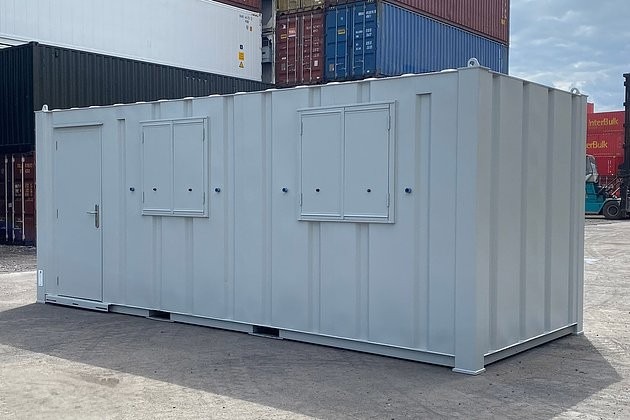
- Mobile Offices: Containers can be transformed into workplaces or work spaces in building and construction sites or remote locations.
- Structure: Eco-friendly building companies repurpose containers to produce office or homes.
Often Asked Questions
Q1: What is the weight of an empty 20-foot container?
Response: An empty 20-foot container typically weighs between 2,200 kg to 2,500 kg (roughly 4,850 pounds to 5,500 lbs).
Q2: How much cargo can a 20-foot container bring?
Answer: A standard 20-foot container can bring a maximum payload of about 22,000 kg (roughly 48,500 lbs).
Q3: How can I fill a 20-foot container effectively?
Answer: To load effectively:
- Use pallets to simplify the loading procedure.
- Distribute the weight equally.
- Stack products logically, positioning much heavier items at the bottom.
Q4: Can a 20-foot container be delivered by air?
Answer: No, shipping containers are mainly designed for cargo shipping by means of ships and trucks. Air cargo utilizes specialized containers designed for aircraft.
Q5: Are there any policies for shipping a 20-foot container?
Answer: Yes, regulations may vary by nation. Carriers need to offer accurate weight statements, freight descriptions, and comply with customs requirements.
Q6: How lots of 20-foot containers fit in a shipping vessel?
Response: The variety of 20-foot containers that can suit a vessel depends upon the ship’s design, size, and available space, but a normal freight ship can carry several thousand TEUs (Twenty-foot Equivalent Units).
In summary, a 20-foot container is a versatile and extensively used shipping solution. Its basic dimensions, payload capacity, and unique benefits make it an outstanding option for different logistics needs. Whether carrying products, moving homes, or repurposing for new usages, understanding the size and capability of a 20-foot container can help you make notified decisions in your shipping endeavors. For anybody involved in shipping or moving, buying a 20-foot container can be a strategic option that includes efficiency and dependability to your logistics operations.